I first heard of the Beatles when I was nine years old. I spent most of my holidays on Merseyside then, and a local girl gave me a bad publicity shot of them with their names scrawled on the back. This was 1962 or '63, before they came to America. The photo was badly lit, and they didn't quite have their look down; Ringo had his hair slightly swept back, as if he wasn't quite sold on the Beatles haircut yet. I didn't care about that; they were the band for me. The funny thing is that parents and all their friends from Liverpool were also curious and proud about this local group. Prior to that, the people in show business from the north of England had all been comedians. Come to think of it, the Beatles recorded for Parlophone, which was a comedy label.
I was exactly the right age to be hit by them full on. My experience -- seizing on every picture, saving money for singles and EPs, catching them on a local news show -- was repeated over and over again around the world. It was the first time anything like this had happened on this scale. But it wasn't just about the numbers; Michael Jackson can sell records until the end of time, but he'll never matter to people as much as the Beatles did.
Every record was a shock when it came out. Compared to rabid R&B evangelists like the Rolling Stones, the Beatles arrived sounding like nothing else. They had already absorbed Buddy Holly, the Everly Brothers and Chuck Berry, but they were also writing their own songs. They made writing your own material expected, rather than exceptional.

John Lennon and Paul McCartney were exceptional songwriters; McCartney was, and is, a truly virtuoso musician; George Harrison wasn't the kind of guitar player who tore off wild, unpredictable solos, but you can sing the melodies of nearly all of his breaks. Most important, they always fit right into the arrangement. Ringo Starr played the drums with an incredibly unique feel that nobody can really copy, although many fine drummers have tried and failed. Most of all, John and Paul were fantastic singers.
Lennon, McCartney and Harrison had stunningly high standards as writers. Imagine releasing a song like "Ask Me Why" or "Things We Said Today" as a B side. They made such fantastic records as "Paperback Writer" b/w "Rain" or "Penny Lane" b/w "Strawberry Fields Forever" and only put them out as singles. These records were events, and not just advance notice of an album release.
Then they started to really grow up. Simple love lyrics to adult stories like "Norwegian Wood," which spoke of the sour side of love, and on to bigger ideas than you would expect to find in catchy pop lyrics.

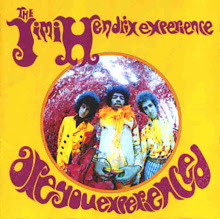
They were pretty much the first group to mess with the aural perspective of their recordings and have it be more than just a gimmick. Brilliant engineers at Abbey Road Studios like Geoff Emerick invented techniques that we now take for granted in response to the group's imagination. Before the Beatles, you had guys in lab coats doing recording experiments in the Fifties, but you didn't have rockers deliberately putting things out of balance, like a quiet vocal in front of a loud track on "Strawberry Fields Forever." You can't exaggerate the license that this gave to everyone from Motown to Jimi Hendrix.
My absolute favorite albums are Rubber Soul and Revolver. On both records you can hear references to other music -- R&B, Dylan, psychedelia -- but it's not done in a way that is obvious or dates the records. When you picked up Revolver, you knew it was something different. Heck, they are wearing sunglasses indoors in the picture on the back of the cover and not even looking at the camera . . . and the music was so strange and yet so vivid. If I had to pick a favorite song from those albums, ift would be "And Your Bird Can Sing" . . . no, "Girl" . . . no, "For No One" . . . and so on, and so on. . . .

Their breakup album, Let It Be, contains songs both gorgeous and jagged. I suppose ambition and human frailty creep into every group, but they managed to deliver some incredible performances. I remember going to Leicester Square and seeing the film of Let It Be in 1970. I left with a melancholy feeling.
The word Beatlesque has been in the dictionary for a while now. I can hear them in the Prince album Around the World in a Day; in Ron Sexsmith's tunes; in Harry Nilsson's melodies. You can hear that Kurt Cobain listened to the Beatles and mixed them in with punk and metal in some of his songs. You probably wouldn't be listening to the ambition of the latest OutKast record if the Beatles hadn't made the White Album into a double LP!
I've co-written some songs with Paul McCartney and performed with him in concert on two occasions. In 1999, a little time after Linda McCartney's death, Paul did the Concert for Linda, organized by Chrissie Hynde. During the rehearsal, I was singing harmony on a Ricky Nelson song, and Paul called out the next tune: "All My Loving." I said, "Do you want me to take the harmony line the second time round?" And he said, "Yeah, give it a try." I'd only had thirty-five years to learn the part. It was a very poignant performance, witnessed only by the crew and other artists on the bill.
At the show, it was very different. The second he sang the opening lines -- "Close your eyes, and I'll kiss you" -- the crowd's reaction was so intense that it all but drowned the song out. It was very thrilling but also rather disconcerting. Perhaps I understood in that moment one of the reasons why the Beatles had to stop performing. The songs weren't theirs anymore. They were everybody's.

 "I am out to sing songs that will prove to you that this is your world and that if it has hit you pretty hard and knocked you for a dozen loops, no matter what color, what size you are, how you are built, I am out to sing the songs that make you take pride in yourself and in your work. And the songs that I sing are made up for the most part by all sorts of folks just about like you." Wood Guthrie
 In New York, Woody joined up with Pete Seeger to form leftist troupe the Almanac Singers, and enjoyed a bit of fame entertaining leftist organizations and labor unions. Soon, he was married again, and fathered four children, including Cathy, Arlo, Joady, and Nora Lee.


 David Bowie's contribution to rock & roll has been wit and sophistication. He's smart, he's a true musician and he can really sing. He's got such a big range: I like the Ziggy Stardust voice, but he's got a lot of different voices. He's got his crooner voice, when he wants to. And he has a melodic sense that's well above anyone else in rock & roll. Most people could not sing some of his melodies. He can really go for a high note. Take "Satellite of Love," on my Transformer album: There's a part at the very end, where he goes all the way up. It's fabulous.