Radiohead By Dave Matthews

Every time I buy a Radiohead album, I have a moment where I say to myself, "Maybe this is the one that will suck." But it never does. I wonder if it's even possible for them to be bad on record.

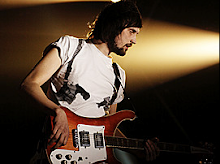
It belittles Radiohead to describe their music as having "hooks." Their music talks to you, in a real way. It can take you down a quiet street before it drops a beautiful musical bomb on you. It can build to where you think the whole thing will crumble beneath its own weight -- and then Thom Yorke will sing some melody that just cuts your heart out of your chest. There's a point on the album Kid A where I start feeling claustrophobic, stuck in a barbed-wire jungle -- and then I suddenly fall out and I'm sitting by a pool with birds singing. Radiohead can do all of these things in a moment, and it drives me fucking crazy.

My reaction to Radiohead isn't as simple as jealousy. Jealousy just burns; Radiohead infuriate me. But if it were only that, I wouldn't go back and listen to those records again and again. Listening to Radiohead makes me feel like I'm a Salieri to their Mozart. Yorke's lyrics make me want to give up. I could never in my wildest dreams find something as beautiful as they find for a single song -- let alone album after album. And every time, they raise their finger to the press and the critics and say, "Nothing we do is for you!" They followed their most critically acclaimed record, OK Computer, with their most radical change, Kid A. It's not that they're indifferent: It's that the strength of character in their music is beyond their control.

Seeing them perform makes me even angrier. No matter how much they let go in their shows, they never lose their clarity. There's no point where Jonny Greenwood or Ed O'Brien will suddenly look up and say, "Where the fuck are we?" There are no train wrecks in Radiohead; every album and performance is wrenching. God, these guys have suffered, or they can fake it like nobody else.

The Stooges By Thurston Moore

For me, the Stooges were the perfect embodiment of what music should be -- of wanting it to be alive, riding the edge of control. Their music was total high-energy blues, with the contemporary freakout of Jimi Hendrix and the free-jazz spirit of John Coltrane. Iggy wanted the Stooges to be what he'd seen in Chicago as a young guy -- these old bluesmen playing so hard that, as Iggy once said, the music drips off you.

I was fourteen when I first saw a picture of Iggy onstage: shirtless, with his body spray-painted silver. He was sweating -- it looked like glitter sweat -- and he had a chipped tooth. He looked young and on fire. But Iggy's parents were intellectuals -- his father was an English teacher -- and that gave him an edge. He had focus. Iggy believed what he was doing was important -- this self-reliant, anti-establishment art form.

The Stooges' sound was so evocative yet so simple. Scott Asheton played drums as if he was in an electric-blues band. On The Stooges and Fun House, while his brother Ron, the guitarist, was playing these loud bar-chord progressions, Scott was making the band rev and swing. And when I played with Ron for the soundtrack of Velvet Goldmine, the first week was a crash course on how to play Stooges songs. We went through those first two albums, and there was that Asheton swing again, the way he rocked the chord grooves.

Raw Power was made by a different band, with James Williamson on guitar and Ron on bass. It's the ultimate fuck-off. This is a band getting very strung out, putting so much blood and soul into what they're doing, and for the most part looked upon as trash. There's a damaged quality to David Bowie's original mix that is way ahead of its time.

Seeing the Stooges in reunion with Mike Watt from the Minutemen on bass was awesome. When they played their first gig, in 2003 at Coachella, the first thing Iggy did was start jumping in the air, flipping the bird to the crowd -- "Fuck you, fuck you and fuck you." Then Iggy turned to the side of the stage, where the elite were standing -- Sonic Youth, Queens of the Stone Age, the Red Hot Chili Peppers and the other all-access rock stars -- and he gave us the jerk-off motion. It was great. After all this time, he's still at war.

Roxy Music By John Taylor

Roxy Music were a huge influence on both punk and New Wave: They anticipated the restraint and the coolness of the Eighties, but you wouldn't have had the Sex Pistols without them, either. They made playing music look really cool and sexy, and they did it without being elitist virtuosos. They were very fresh, very modern -- especially the electronics in their sound -- but at the same time, their music was evocative of a romantic past, which England was obsessed with. On their first album, you hear strains of World War II music, of swing and Glenn Miller. But it was all mixed up in a way that made the music seem terribly new.

Bryan Ferry was obviously the songwriter and frontman. His lyrics were very thoughtful and arty but also very warm and full of feeling. In the early days you had Brian Eno, who was the Jimi Hendrix of the synthesizer. There were tremendous musical personalities in the band: Phil Manzanera, Andy Mackay, Paul Thompson. You could get your teeth into everybody; this is a band whose solo albums were worth getting. They all had quite interesting voices. And they were a band that you could argue about; Paul Thompson had a tremendous fan club, and he's the least-known of all of them.

Also, it has to be said: You could never separate them from their look. I think Roxy had a lot of conversations about what the band should wear. You expect that kind of thing to happen when Britney Spears is being launched, but you don't expect it to happen within a band: finding just the right pair of shades for the guitar player, finding these jumpsuits for the sax player. They had great, very sexy album covers, too. But it wasn't like their sound was lagging behind.

Their best song may be "Virginia Plain." That's the manifesto. When I saw them play that song on Top of the Pops, I had to have it -- I had to get on my bicycle and ride to the nearest record store. Another one is "In Every Dream Home a Heartache," from the second album, about a guy who has everything. He's got the beautiful house, he's got the car, all the modern comforts. But for love, he takes the inflatable doll out every night and makes out with it. "I blew up your body/But you blew my mind." You try and write a song about being in love with a blow-up doll and make it sound cool!

Imagine it's 1973, you're looking for something to do, and school isn't really working for you, and a band like Roxy Music comes along. You'd say, "That's what I want to do." What else could compare to making that kind of noise, wearing those kinds of clothes?

The Kinks By Peter Buck

I 've got pretty much every note the Kinks recorded on my iPod -- certainly everything through 1980. And it all sounds good. The Kinks are the only major band from the Sixties I can think of that didn't go psychedelic, didn't do any of that crap that all of the other big bands did at the time. When everyone was writing about Eastern mysticism, Ray Davies was writing about a two-up/two-down flat in some suburb of London. Ray wrote songs about the things that were important to him. He invented his world and gave it life. And in that world, people weren't wearing Nehru jackets, smoking pot and jamming for twenty-four hours a day. The Kinks created a different world -- and I'm glad for it.

When I first heard Village Green Preservation Society, in 1971, I got this picture in my head of small-town English life: village greens, draft beer. But when R.E.M. went to England in 1985, I drove through Muswell Hill -- and it certainly wasn't romantic-looking. From "Waterloo Sunset," I had this picture of a gorgeous vista -- when it's really a grimy train-station area. I realized these songs were all acts of imagination, that Ray was commemorating an England that was slipping away. There is a great air of sadness in those songs.

I am amazed at how great the Kinks' records sounded -- even though, when you listen closely, there is very little going on in them. Village Green is the best example: There are two or three instruments in each song. And yet the songs are perfectly realized, well arranged.

I read that Ray wrote "You Really Got Me" on piano. Then he gives it to his brother Dave, this teenage maniac, who turns it into a demented guitar part. An interviewer once asked Dave if he thought the Kinks had gone heavy metal in the Eighties. He said, "It wasn't called heavy metal when I invented it." When R.E.M. started, Dave's solo on that song was the only solo I knew. So whenever I had to do a solo, I'd play that.

The Kinks slipped into rock history through the back door. All of those great albums that we talk about now, like Face to Face and Village Green -- nobody bought those records in the Sixties. But those of us who love those records -- and a lot of us are musicians -have loved them for more than thirty years.

Neil Young By Flea

There's a rare contradiction in Neil Young's work. He works so hard as a songwriter, and he's written a phenomenal number of perfect songs. And, at the same time, he doesn't give a fuck. That comes from caring about essence. There can be things out of tune and all wild-sounding and not recorded meticulously. And he doesn't care. He's made whole albums that aren't great, and instead of going back to a formula that he knows works, he would rather represent where he is at the time. That's what's so awesome: watching his career wax and wane according to the truth of his character at the moment. It's never phony. It's always real. The truth is not always perfect.

I can't say enough about how much I love Crazy Horse. The sound is so deep, the groove is so deep -- even when they're off, it still sounds great, because they feel it so much. I don't usually go for that approach. I like Sly and the Family Stone, Miles Davis and Mingus. I like consummate steady musicianship. I grew up on jazz. I didn't listen to rock music until I played in my first rock band when I was in high school. I went from progressive to Hendrix to funk to full-on L.A. punk. That's when I had the realization that emotion and content, no matter how simple, were valuable. A great one-chord punk song became as important to me as a Coltrane solo, and I've had the same feeling about Neil Young. He changed the way I thought about rock music. As a bass player, I used to be into very boisterous, syncopated and rhythmically complex songs. After hearing Neil, I appreciated simplicity, the poignancy of "less is more."

My favorite Neil album is Zuma, with "Pardon My Heart" and "Lookin' for a Love": "But I hope I treat her kind/And don't mess with her mind/When she starts to see the darker side of me." And "Tell Me Why," on After the Gold Rush -- when he says, "Is it hard to make arrangements with yourself/When you're old enough to repay but young enough to sell?" it feels like me. I know I'm not alone. Tonight's the Night is probably the greatest raw rock record ever made, on a level with the Stooges' Fun House or any Hendrix album. It's such a mess, with stuff recorded so loud that it distorts. The background vocals are completely out of tune. And I wouldn't change a note. It's the spirit of what rock music is, and it's the reason to play rock music.

Neil is the guy I look at when I think about getting older in a rock band and still having dignity and relevance and honesty. He's never, ever sold out, and he's never pretended to be anything other than what he is. The Chili Peppers get offers all the time to sell songs for commercials and tour sponsorships, and our manager says it's not considered selling out anymore. It's the smart move, he says. Maybe we could whore ourselves out for the right price someday. I don't know. But I always think, "Would Neil Young do this?" And the answer is no. Neil Young wouldn't fuckin' do it.

Johnny Cash By Kris Kristofferson

Johnny Cash was a biblical character. He was like some old preacher, one of those dangerous old wild ones. He was like a hero you'd see in a western. He was a giant. And unlike anyone else I've known, he never lost that stature. I don't think we'll see anyone like him again.

Of course, the first thing he'll be remembered for is the originality of his music. The first time I heard Johnny Cash was when he released "I Walk the Line" in 1956. It was unlike anything I'd ever heard. Elvis had had a lot of hits by that point, but "I Walk the Line" was completely different. It didn't sound much like any of the country music that was popular at the time, either. There was a kind of dark energy around John. My first hero, when I was a kid, was Hank Williams, and he had a similar energy. You could tell they were both wild men.

As a songwriter, I've always loved his lyrics. At the beginning of his career, John released a bunch of powerful songs in a very short time. For me, the best one was always "Big River." It's so well-written, so unlike anything else. The lines don't even seem to rhyme. "I met her accidentally in St. Paul, Minnesota/And it tore me up every time I heard her drawl." His imagery was so powerful: "Then you took me to St. Louis later on, down the river/A freighter said she's been here/But she's gone, boy, she's gone/I found her trail in Memphis/But she just walked up the block/She raised a few eyebrows, and then she went on down alone."

The first time I saw John live, I was on leave from the Army, visiting Nashville. He was playing the Grand Ole Opry, and I was watching from backstage -- and he was the most exciting performer I'd ever seen. At the time, he was skinnier than a snake, and he was just electric. He used to prowl the stage like a panther. He looked like he might explode up there. And in fact, there were times when he did. A couple of nights at the Opry, he knocked out all of the footlights. I think they banned him for a while after that. But they banned Hank Williams, too. They were a pretty conservative crowd.

The main thing about John, though -- the thing that everybody could sense -- was his integrity, the integrity of his relationship with his music, with his life and with other people. He stood up for Bob Dylan when everyone in the music business was criticizing Dylan's move from folk to electric. And he did the same for me, in the Eighties, when I was taking a lot of criticism for going down to Nicaragua. Once I was opening for him in Philadelphia, and I dedicated a song to Mumia Abu-Jamal, who is on death row there. After I got offstage, they told me the police had gone ballistic and that I'd have to go back out and apologize. John heard about it and said, "You don't have to apologize for anything on my show." That's the kind of guy he was. Throughout his entire career, he stood up for the underdog.

I thought the last album John did, The Man Comes Around, was terrific. I remember driving on my tractor mower and listening to it on my headphones and just weeping. His version of "Danny Boy" kills me every time.

I think he'll be remembered for the way he grew as a person and an artist. He went from being this guy who was as wild as Hank Williams to being almost as respected as one of the fathers of our country. He was friends with presidents and with Billy Graham. You felt like he should've had his face on Mount Rushmore.

Points Mean Prizes

Now, with the only lasting memories of the festive period being that wafer thin bank balance you now own, I thought I would give you something to look forward to. Something to help ease the January blues and help you move forward into a bright and prosperous 2010. And what’s that I hear you ask? Why, I’ve got a pair of tickets to give away for Twisted Wheels gig at the Lexington in London on February 23rd. And all you have to do to get them is answer this very simple question below…

What record label are Twisted Wheel signed to?

For a chance in winning just email your answer to info@cartersaidwhat.com before midnight on February 19th. It’s that simple.

For more info on Twisted Wheel CLICK HERE to check out my interview with them last year. Top boys. Top band.

Good luck people…

The Ramones By Lenny Kaye

Every rock & roll generation needs reminding of why it picks up a guitar in the first place, and four non-brothers from the borough of Queens had a concept that was almost too perfect. Their look -- ripped jeans, tight T-shirt, high-top sneakers, bowl haircut and a black motorcycle jacket -- was a cartoon version of rock's tough-guy ethos. When they first started, they played what they knew how to play, which wasn't much, and worked it to their advantage. They opted for speed rather than complexity, they aspired to be the Beach Boys, Alice Cooper and the Bay City Rollers, and their rotational three chords and headlong lunge kept them skidding through the simpleton catchphrases of their singalongs.

They posited themselves unashamedly against the enigmatic mind games of progressive rock, the long solos, the Ring Cycle lyrics and symphonic synthesizers. Not for them the miscegenation of other musics; the Ramones were pure, unadulterated -- and hardly adult, in their adolescent concerns of sniffing glue and beating on brats with a baseball bat, even if the brats were themselves. Their only-child sibling rivalry meshed like any television reality show, clocking in at under half an hour, with a ready-made laugh track. Johnny was the stern older brother, disciplined, military; Dee Dee was the blunt instrument, the Ramone who took it to the corner of Fifty-third and Third; Tommy was the producer, familiar with the byways of the music business, and like any good producer, he knew that you build a great track from the drums out. Joey was the beating heart.

The Ramones had their act so together that they would change it only in increments for two decades after they took it out of the CBGB nest in 1975. They were easily understood, translatable. When the band got to England on Independence Day 1976, returning the favor of the English Invasion in a fun-house mirror, the die was cast, punk rock and anarchy tangling, a frontal assault on here-we-go-again pop subculture.

The Ramones always believed in their music's message of self-deliverance. They celebrated rock & roll, patriotic flag-wavers, simultaneously harking backward and forward. Their music wasn't angry, though it did have firepower and relentless energy. If anything, the Ramones affirmed that if they could do it, you could do it; just be resolute. Count to four.

They've all left the band or left the planet by this time, and this is a say-hey to Joey and Dee Dee, who are now immortal in more ways than one. But when I think of a Ramones moment, I remember not the early years -- when the bands played for each other on the Bowery and each was like a different world -- but a late afternoon in May, somewhere in New England, a daylong festival, maybe the early Eighties, sun shining, a holiday weekend. I'm standing backstage with Johnny, and we're talking about nothing much, where we've been, guitars we've known, the Red Sox, and finally the conversation stops, and we just look around, quiet in the midst of electric noise, seeing where rock & roll has brought us on this beautiful afternoon, playing the music we love.

The Velvet Underground By Julian Casablancas

When you listen to a classic-rock station today, why don't they play the Velvet Underground? Why is it always Boston and Led Zeppelin? And why are the Rolling Stones so much more popular than the Velvets? OK, I understand why the Stones are more popular. But there is also a part of me that has always felt that it should have been the other way around. The Velvet Underground were way ahead of their time. And their music was weird. But it also made so much sense to me. I couldn't believe this wasn't the most popular music ever made.

Listening to those four studio albums now is like reading a good book that takes place in a distant time. When I hear The Velvet Underground and Nico or Loaded, I feel like I'm in Andy Warhol's Factory in the 1960s or hanging out at Max's Kansas City. The way Lou Reed wrote and sang about drugs and sex, about the people around him -- it was so matter-of-fact. I believed every word of "Heroin." Reed could be romantic in the way he portrayed these crazy situations, but he was also intensely real. It was poetry and journalism.

A lot of people associate the Velvets with feedback and noise. White Light/White Heat is the kind of record you have to be in the mood for. You have to be in a shitty bar, in a really shitty mood. But the Velvets created some very beautiful music, too: "Sunday Morning," with John Cale's viola; "Candy Says"; "All Tomorrow's Parties" -- I can't imagine that song without Nico singing it, although I thought Maureen Tucker had a cool voice, as well as being a really cool drummer. She had a femininity. I thought she sounded hotter than Nico.

In the beginning, the Strokes definitely drew from the vibe of the Velvets. I listened to Loaded all the time when we started the band, while I was writing my first songs. For four solid months, it was just Loaded and this Beach Boys greatest-hits record, Made in the U.S.A. A lot of our guitar tones are based on what Reed and Sterling Morrison did.

I honestly wish we could have copied them more. We didn't come close enough. But that was cool, because it became more of our own thing. Which is something else I got from the Velvets. They taught me just to be myself.

Twisted Wheel: Coming to a Town Near YOU

For many things, a Twisted Wheel wouldn’t prove to be much help. I mean, you wouldn’t get very far attaching busted wheels to your beloved Rally Racer if you decided to do the London to Brighton bike ride. Or you wouldn’t get very far if Dale gave you trolley with knackered wheels in order to sweep round his supermarket. And then there are Wagon Wheels. You wouldn’t be too keen on eating one of those if it came to you all bunt. In fact, out of all the wheels I can think of, the only one which actually works better a little of shape is the three-piece rock & roll outfit from Oldham.

Now, these boys are personal favourites of mine, and if they’re not stuck on you iPod, CD player, tape deck, turntable or gramophone - they should be. Things seem to be going from strength to strength for Twisted Wheel. After getting off tour with both Oasis and Weller, they are about to embark on their own headline set of shows. And there’s not better way to ride the wheel than by checking them live.

The new tour kick starts in February at the birthplace of Cadbury’s and Duran Duran, Birmingham. They then run up and down the country before calling it a day in Blackburn in April. Below is their complete tour diary along with details of how you can get hold of tickets for any of their gigs.

February
Thursday 11th Birmingham: Academy 3 0871 2200 260 (24 hour) www.gigsandtours.com
Friday 12th Manchester: Academy 2 0871 2200 260 (24 hour) www.gigsandtours.com
Saturday 13th Leeds: Brudenell Social 0113 2454650 www.lunatickets.co.uk
Thursday 18th Nottingham: Bodega 08713 100 000 www.alt-tickets.co.uk
Friday 19th Sheffield: Leadmill 0844 847 2430 www.ticketweb.co.uk
Saturday 20th Edinburgh: Electric Circus 08444 771 000 www.ticketweb.co.uk
Tuesday 23rd London: Lexington www.thelexington.co.uk
Thursday 25th London: Wimbledon Watershed www.seetickets.com www.watershedlive.com
Saturday 27th Coventry: Kasbah 0247 655 4473 http://www.seetickets.com/

March
Friday 5th Wigan: Independence www.ticketline.co.uk
Saturday 6th Buckley: Tivoli 01244 546 201 www.seetickets.com www.thetivnightclub.co.uk
Thursday 11th Grimsby: The County 07880 852910
Friday 12th Scunthorpe: The Brumby 07880 852910
Saturday 13th Swindon: The 12 Bar 01793 535713 www.wegottickets.com
Friday 19th Hull: The Lamp 08444 771 000 www.ticketweb.co.uk
Saturday 20th Leicester: Music Cafe www.ticketsource.co.uk
Sunday 28th Bathgate: Harley http://www.tickets-scotland.com/

April
Friday 2nd Blackburn: Live Lounge http://www.wegottickets.com/

Jimi Hendirx by John Mayer

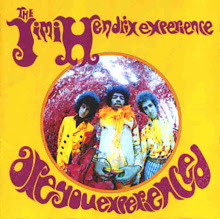
Jimi Hendrix is one of those extraordinary hubs of music where everybody lands at some point. Every musician passes through Hendrix International Airport eventually -- whether you're a Black Sabbath fan or an Elmore James fan; whether you like Hanson or the Grateful Dead. He is the common denominator of every style of contemporary music. There were so many sides to his playing. Was he a bluesman? Listen to "Voodoo Chile" and you'll hear some of the eeriest blues you can find. Was he a rock musician? He used volume as a device. That's rock. Was he a sensitive singer-songwriter? In "Bold As Love," he sings, "My yellow in this case is not so mellow/In fact I'm trying to say it's frightened like me" -- that is a man who knows the shape of his heart.

So often, he's portrayed as a loud, psychedelic rock star lighting his guitar on fire. But when I think of Hendrix, I think of some of the most placid, lovely guitar sounds on songs like "One Rainy Wish," "Little Wing" and "Drifting." "Little Wing" is painfully short and painfully beautiful. It's like your grandfather coming back from the dead and hanging out with you for a minute and a half and then going away. It's perfect, then it's gone.

I think the reason musicians love Hendrix's playing so much is that the language of it was so native to his head and heart. He had a secret relationship with playing the guitar, and though it was incredibly technical and based in theory, it was his theory. And I think that was sacred to him. That's why you almost never read an interview with him explaining his live-gear setup or his favourite scales. That's part of what made his playing so compelling -- all you heard was the colour. The math is what's been applied ever since.

I discovered Hendrix by way of Stevie Ray Vaughan. I heard Stevie Ray do "Little Wing," and I started working my way backward to Hendrix. The first Hendrix record I bought was Axis: Bold As Love, because it had "Little Wing" on it. I remember staring at the album cover for hours. Then I remember spending months listening to Electric Ladyland, which was very creepy. There's something dark about it in certain places that maybe Hendrix was too honest to hide.

Hendrix invented a kind of cool. The cool of a big conch-shell belt. The cool of boots that your jeans are tucked into. If Jimi Hendrix is an influence on somebody, you can immediately tell. Give me a guy who's got some kind of weird-ass goatee and an applejack hat, and you just go, "He got to you, didn't he?"

Hendrix has the allure of the tragic figure: We all wish we were genius enough to die before we're twenty-eight. People want to paint him as this lonely, shy figure who managed to let himself open up on the stage and play straight colours through the crowd. There's something heroic about it, but there's nothing human about it.

Everybody is so caught up in the otherworldliness of Jimi Hendrix. I prefer to think about his human side. He was a man who had a Social Security number, not an alien. The merchandising companies made the Space God. They put Jimi Hendrix's face on a tie-dyed T-shirt, and somehow that's what he became. But when I listen to Hendrix, I just hear a man, and that's when it's most beautiful -- when you remember that another human being was capable of what he achieved. I will always try to attain that kind of control on the guitar: Hendrix's playing was sloppy, but it was controlled. Who I am as a guitarist is defined by my failure to become Jimi Hendrix. And that's who a lot of people have become. However far you stop on your climb to be like him, that's who you are.

RIP Jay Reatard

Memphis garage rocker Jay Reatard, who broke out last year thanks to Watch Me Fall, has died at the age of 29, Reatard’s label Matador Records confirmed. According to Memphis’ Commercial Appeal, Reatard was found dead in his Memphis home at 3:30 am this morning and reportedly died in his sleep. “We are devastated by the death of Jimmy Lee Lindsey Jr., aka Jay Reatard. Jay was as full of life as anyone we’ve ever met, and responsible for so many memorable moments as a person and artist,” Matador Records said in a statement. “We’re honored to have known and worked with him, and we will miss him terribly.” Watch Reatard perform “Blood Visions” last month in Atlanta in the video above.

“Since 1998’s Teenage Hate, Memphian Jay “Reatard” Lindsey, 29, has spit enough pissed-off, low-fi garage punk to become DIY royalty,” Will Hermes wrote in his three-and-a-half star review of Watch Me Fall. “There’s also choral sugar, dub effects, sweet guitar cascades and mad hooks. On the majestic closer, alongside a sad cello, he insists, ‘There is no sun.’ With sound this blazingly bright, who needs it?”

In 2008, Beck recruited Reatard to record a cover of Modern Guilt’s “Gamma Ray” for the B side of that song’s single. For last year’s Record Store Day, Reatard’s “Hang Them All” was featured on a split 7” with Sonic Youth’s “No Garage.” Reatard also recently opened for the Pixies during their run of Doolittle concerts. On their Facebook page, the Pixies wrote “We want to express our condolences to the friends and family of Jay Reatard, on his sudden passing today.”

The Who by Eddie Vedder

The Who began as spectacle. They became spectac-ular. Early on, the band was in pure demolition mode; later, on albums like Tommy and Quadrophenia, they coupled that raw energy with precision and desire to complete musical experiments on a grand scale. They asked, "What were the limits of rock & roll? Could the power of music actually change the way you feel?" Pete Townshend allowed that there be spiritual value in music. They were an incredible band whose main songwriter happened to be on a quest for reason and harmony in his life. He shared that journey with the listener, becoming an inspiration for others to seek out their own path - this while being in the Guinness book of world records as the world's loudest band.

Presumptuously I speak for all Who fans when I say being a fan of the Who has incalculably enriched my life. What disturbs me about the Who is the way they smashed through every door of rock & roll, leaving rubble and not much else for the rest of us to lay claim to. In the beginning they took on an arrogance when, as Pete says, "We were actually a very ordinary group." As they became accomplished, this attitude stuck. Therein lies the thread to future punks. They wanted to be louder, so they had Jim Marshall invent the 100-watt amp. Needed more volume, so they began stacking them. It is said that the first guitar feedback ever to make it to record was on "Anyway, Anyhow, Anywhere," in 1965. The Who told stories within the confines of a song and, over the course of an entire album, pushed boundaries. How big of a story could be told? And how would it transmit (pre-video screens, etc.) to a large crowd? Smash the instruments? Keith Moon said they wanted to grab the audience by the balls. Pete countered that like the German autodestruct movement, where they made sculpture that would collapse and buildings that would explode, it was high art.

I was around nine when a baby sitter snuck Who's Next onto the turntable. The parents were gone. The windows shook. The shelves were rattling. Rock & roll. That began an exploration into music that had soul, rebellion, aggression, affection. Destruction. And this was all Who music. There was the mid-Sixties maximum-R&B period: mini-operas, Woodstock, solo records. Imagine, as a kid, stumbling upon the locomotive that is Live at Leeds. "Hi, my name is Eddie. I'm ten years old and I'm getting my fucking mind blown!" The Who on record were dynamic. Roger Daltrey's delivery allowed vulnerability without weakness; doubt and confusion, but no plea for sympathy. (You should hear Roger's vocal on a song called "Lubie [Come Back Home]," a bonus track from the My Generation reissue. It's top-gear.)

The Who quite possibly remain the greatest live band ever. Even the list-driven punk legend and music historian Johnny Ramone agrees with me on this. You can't explain Keith Moon or his playing. John Entwistle was an enigma unto himself, another virtuoso musical oddity. Roger turned his mike into a weapon, seemingly in self-defense. All the while, Pete was leaping into the rafters wielding a Seventies Gibson Les Paul, which happens to be a stunningly heavy guitar. As a live group, they created momentum, and they seemed to be released by the ritual of their playing. (Check out "A Quick One," from The Rolling Stones Rock and Roll Circus.)

In Chicago recently, I saw Pete wring notes out of his guitar like a mechanic squeezing oil from a rag. I watched as the guitar became a living being, one getting its body bashed and its neck strangled. As Pete set it down, I swear I sensed relief coming from that guitar. A Stratocaster with sweat on it. The guitar's sweat.

John and Keith made the Who what they were. Now they're different, but still the Who. Roger's a rock. And at this point Pete has been through and survived more than anyone in rock royalty. Perhaps even beyond Keith Richards, who was actually guilty of most things he was accused of. Drummer Zak Starkey played me a new song a while back, "Real Good Looking Boy." It was beyond moving.

The songwriter-listener relationship grows deeper after all the years. Pete saw that "a celebrity in rock is charged by the audience with a function, like, 'You stand there and we will know ourselves.' Not 'You stand there and we will pay you loads of money to keep us entertained as we eat our oysters.' " He saw the connection could be profound. He also realized the audience may say, "When we're finished with you, we'll replace you with somebody else." For myself and so many others (including shopkeepers, foremen, professionals, bellboys, gravediggers, directors, musicians), they won't be replaced. Yes, Pete, music can change you.

Led Zeppelin By Dave Grohl

Heavy metal would not exist without Led Zeppelin, and if it did, it would suck. Led Zeppelin were more than just a band -- they were the perfect combination of the most intense elements: passion and mystery and expertise. It always seemed like Led Zeppelin were searching for something. They weren't content being in one place, and they were always trying something new. They could do anything, and I believe they would have done everything if they hadn't been cut short by John Bonham's death. Zeppelin served as a great escape from a lot of things. There was a fantasy element to everything they did, and it was such a major part of what made them important. Who knows if we'd all be watching Lord of the Rings movies right now if it wasn't for Zeppelin.

They were never critically acclaimed in their day, because they were too experimental and they were too fringe. In 1968 and '69, there was some freaky shit going on, but Zeppelin were the freakiest. I consider Jimmy Page freakier than Jimi Hendrix. Hendrix was a genius on fire, whereas Page was a genius possessed. Zeppelin concerts and albums were like exorcisms for them. People had their asses blown out by Hendrix and Jeff Beck and Eric Clapton, but Page took it to a whole new level, and he did it in such a beautifully human and imperfect way. He plays the guitar like an old bluesman on acid. When I listen to Zeppelin bootlegs, his solos can make me laugh or they can make me tear up. Any live version of "Since I Been Loving You" will bring you to tears and fill you with joy all at once. Page doesn't just use his guitar as an instrument. For him, it's like some sort of emotional translator.

John Bonham played the drums like someone who didn't know what was going to happen next -- like he was teetering on the edge of a cliff. No one has come close to that since, and I don't think anybody ever will. I think he will forever be the greatest drummer of all time. You have no idea how much he influenced me. I spent years in my bedroom -- literally fucking years -- listening to Bonham's drums and trying to emulate his swing or his behind-the-beat swagger or his speed or power. Not just memorizing what he did on those albums but getting myself into a place where I would have the same instinctual direction as he had. I have John Bonham tattoos all over my body -- on my wrists, my arms, my shoulders. I gave myself one when I was fifteen. It's the three circles that were his insignia on Zeppelin IV and on the front of his kick drum.

"Black Dog," from Zeppelin IV, is what Led Zeppelin were all about in their most rocking moments, a perfect example of their true might. It didn't have to be really distorted or really fast, it just had to be Zeppelin and it was really heavy. Then there's Zeppelin's sensitive side -- something people overlook, because we think of them as rock beasts, but Zeppelin III was full of gentle beauty. That was the soundtrack to me dropping out of high school. I listened to it every single day in my VW bug, while I contemplated my direction in life. That album, for whatever reason, saved some light in me that I still have.

I heard them for the first time on AM radio in the Seventies, right around the time that "Stairway to Heaven" was so popular. I was six or seven years old, which is when I'd just started discovering music. But it wasn't until I was a teenager that I discovered the first two Zeppelin records, which were handed down to me from the real stoners. We had a lot of those in the suburbs of Virginia, and a lot of muscle cars and keggers and Zeppelin and acid and weed. Somehow they all went hand in hand. To me, Zeppelin were spiritually inspirational. I was going to Catholic school and questioning God, but I believed in Led Zeppelin. I wasn't really buying into this Christianity thing, but I had faith in Led Zeppelin as a spiritual entity. They showed me that human beings could channel this music somehow and that it was coming from somewhere. It wasn't coming from a songbook. It wasn't coming from a producer. It wasn't coming from an instructor. It was coming from somewhere else.

I believe Zeppelin will come back and prove themselves to once again be the greatest rock band of all time. It will happen. They'll find someone to play the drums and I'll be right there, front row at every goddamn show. Then I could finally die a happy man.

The Rolling Stones by Steven Van Zandt


The Rolling Stones are my life. If it wasn't for them, I would have been a Soprano for real. I first saw the Stones on TV, on Hollywood Palace in 1964. In '64, the Beatles were perfect: the hair, the harmonies, the suits. They bowed together. Their music was extraordinarily sophisticated. The whole thing was exciting and alien but very distant in its perfection. The Stones were alien and exciting, too. But with the Stones, the message was, "Maybe you can do this." The hair was sloppier. The harmonies were a bit off. And I don't remember them smiling at all. They had the R&B traditionalist's attitude: "We are not in show business. We are not pop music." And the sex in Mick Jagger's voice was adult. This wasn't pop sex -- holding hands, playing spin the bottle. This was the real thing. Jagger had that conversational quality that came from R&B singers and bluesmen, that sort of half-singing, not quite holding notes. The acceptance of Jagger's voice on pop radio was a turning point in rock & roll. He broke open the door for everyone else. Suddenly, Eric Burdon and Van Morrison weren't so weird -- even Bob Dylan.

It was completely unique: a white performer doing it in a black way. Elvis Presley did it. But the next guy was Jagger. There were no other white boys doing this. White singers stood there and sang, like the Beatles. The thing we associate with black performers goes back to the church -- letting the spirit physically move you, letting go of social restraints, any form of embarrassment or humiliation. Not being in control: That's what Mick Jagger was communicating. There were a few James Brown and Tina Turner dance moves in there. But James Brown was very choreographed. Those strange moves Jagger was doing -- they were of the spirit. Iggy Pop and Jim Morrison took it to another level, but all that came from Jagger.

In the beginning, it was Brian Jones' band. He named them. He managed them -- got the gigs and wrote to the paper when they got bad reviews. The attitude and aggressiveness -- they first came from him. And the tradition came from him. He was using the blues pseudonym Elmo Lewis and playing bottleneck guitar. Then, on albums like December's Children and Aftermath, he was playing all of these other instruments: dulcimer, harpsichord, sitar. He was so inventive and important. If anybody gets left out of the Stones' story, he's the one.

But Keith Richards has been taken for granted too, relegated historically to permanent rhythm guitar. But his solos were great: "Heart of Stone," "It's All Over Now." And there are the riffs: "Satisfaction," of course, and "The Last Time," which the Stones themselves considered the first serious song they wrote. "Honky Tonk Women" is just one chord. Then he started the tunings: the G tuning and the five-string version of the G tuning. There are chord patterns that relate to his tunings -- the "Gimme Shelter" effect, let's call it -- where you add a suspended note, and it becomes more melodic and rhythmic at the same time. I play rhythm guitar with the E Street Band in Keith's style all the time. Anybody who plays rock & roll guitar does.

Bill Wyman and Charlie Watts, more than any other rock & roll rhythm section, to this day, knew how to swing. It's so much a thing of the past now, but in those days rock & roll was something you danced to. You can just picture how much fun it was to be at the Richmond Hotel in London, at the Station Hotel in 1962 and '63: the crowd going crazy, the Stones going crazy, like they were in a South Side Chicago blues club. You can picture it in the music.

There are generations of young people now who only know the Stones iconically. There is no connection to the music. So I'd send them to the first four albums, the American versions: England's Newest Hitmakers, 12x5, Now and Out of Our Heads. The next lesson is the second great era: Beggars Banquet, Let It Bleed, Sticky Fingers and Exile on Main Street. They make up the greatest run of albums in history -- and all done in three and a half years.

In a lot of ways, the Stones are playing better now than they were in the Sixties. They were quite sloppy in the early days -- which I enjoy. Technically, they're better than they've ever been. The trouble is, their power comes from their first twelve albums. There have been a few great songs since '72, but only a handful. If they were making great records and playing live the way they are now, my God, how amazing would that be?

But live, they're still able to communicate that original power. You can learn a lot from the Stones still: Write good songs, stay in shape and dig deep down for that passion every night. You should live so long, a tenth as long, and be as good as Mick Jagger. It's amazing Keith is still alive. There are a few people who have this constitution of invulnerability, although you shouldn't learn that. Let's be honest: Excessive drug use hurts songwriting. The good side is, he's still on the road, rockin', forty years later. You can't hold most bands together for four years, let alone forty.

I don't look forward to the day when the Stones stop, because going out there and playing continues to be the most effective advertisement for these songs. They may have a bit of production with them onstage now, but it's still about them. They're pushing things to the limit, showing that if you stick to your guns, and don't compromise with what's trendy, you're gonna go a long fucking way.

Sex Pistols: Part Three - The Final Part

For Jones, the son of a hairdresser and a professional boxer, who left home when he was fifteen, the Pistols grew out of old-fashioned rock & roll yearnings, born of limited options and the escape offered by crime. "I definitely didn't feel wanted as a child," he says in Julien Temple's 2000 documentary The Filth and the Fury, one of several moments when the band's dramatized mayhem gives way to reveal the genuine damage to children behind it. "I actually got put back a year because I was so stupid."

So he excelled at crime, or at least persevered. He stole clothes from the stores where idols like Rod Stewart or Bryan Ferry shopped, then progressed to stealing from the stars directly: a fur coat from Ron Wood's house, clothes and a TV from Keith Richards', two guitars from Rod Stewart's, a PA system from a David Bowie gig and assorted drums, microphones and other gear. He didn't necessarily want to learn to play at first, just be part of the action. "All the equipment that I stole, that was the beginning of me being in music. I just wanted to be involved in music, that was it. That was the only way I knew how, to steal musical equipment. And clothes."

One of the stores he stole from was a clothing shop on Kings Road run by McLaren and his partner, Vivienne Westwood, which had a jukebox and a couch where people could hang out. Sex, as the store was soon called, was a destination for style-conscious rock stars and a gathering place for young misfits of mid-Seventies London. Westwood's designs, which included fetish gear and swastikas, foreshadowed some of the contradictions later explored in the Sex Pistols: They signaled liberation through the constriction of pleasure, not the free circulation, and they mocked consumerism and materialism while embracing the purest form of materialism, the fetish. When Jones and Cook took up the stolen instruments, they asked McLaren to manage them, though his limited experience as manager of the New York Dolls -- he put them in red leather and communist insignia -- was a disaster. "I certainly did not want to manage them," McLaren said later. "It was more preventing Steve Jones from thieving in the store."

McLaren, born in 1946, was a student of Fifties rock & roll and the working-class dandyism of British Teddy Boys, named for their revival of Edwardian fashions. To the fraying ends of the 1960s he brought a lightning-fast intellect that combined pop theory, prank politics and visions of hip capitalism. McLaren loved a catchy slogan and the promise of calamity. The idea of the Sex Pistols, he said, was an outgrowth of the store. "I was selling rubber masks and tying that to a jukebox playing tracks from Muddy Waters to Iggy Pop," he said, speaking from his office in Paris. "This really did have an idea before the Sex Pistols, it was already blowing up. And the Sex Pistols just gave it a platform for it to be seen outside the niche of the little shop. It spun it into the domain of the media. In this way, I forced and manipulated and created the Sex Pistols, and doing so, I suppose what I was hoping they would become was fatal attractions, dangerous people to know. I liked the thought that they would forever play as if they were on the verge of collapse into chaos and disaster. And I thought, once bitten by that disaster, you become twice as excited." McLaren speaks in long, discursive paragraphs, and though his account of the Sex Pistols is no more plausible than Rotten's bit about music hall, it has the virtue of capturing the feelings the band elicited. Unlike Lydon, McLaren is a mythmaker, not a debunker. "I didn't see the Sex Pistols as a group," he said. "It's funny to say. You just saw them as an idea. They were a constant, moving idea. Unlike a sculptor that uses clay or a painter uses paint, it was much more organic because they were real, but they were still an idea, and they were used as an idea."

Years before the Sex Pistols, he presaged them in a manifesto for an art-school film. "Be childish," McLaren wrote in the manifesto, which is quoted in the exhaustive history England's Dreaming: Anarchy, Sex Pistols, Punk Rock and Beyond, by Jon Savage. "Be irresponsible. Be disrespectful. Be everything this society hates." Whatever else they were, from the moment they formed in McLaren's shop in the summer of 1975, the Sex Pistols were this manifesto come to life.

Sex Pistols: Part Two

Unable to hear himself onstage, Lydon glared at the crowd, half camp, half Antichrist. Though he didn't know it at the time, it was his last day as Rotten for years to come, because McLaren claimed ownership of the name for the next few years. He had twenty dollars in his pocket, no credit card, no airline ticket, no plan -- no future.

In other words, the Sex Pistols were being the Sex Pistols, and it was crashing down on them, with the clarity of Rotten's famous last words.

"Ever get the feeling you've been cheated?"

In their twenty-six-month public existence, the Sex Pistols managed one album, a handful of singles, a few dozen club gigs, one mildly profane TV appearance, several arrests, two sackings from record companies, some hasty local bans and one dance fad (the pogo, invented by Sid). When they were scaring the English public, three members lived with their mothers and one lived in a rehearsal space with no hot water because they couldn't afford proper homes; Rotten wrote "God Save the Queen," the band's most notorious song, at his parents' breakfast table, awaiting his baked beans. Their best-played shows drew a couple hundred people or fewer, and even for their last gig, at the cavernous Winterland, they split sixty-seven dollars. They were gone before any of them turned twenty-three.

No one managed to destroy more with less.

Of their contemporaries, the Buzzcocks wrote better songs, the Ramones were more conceptually perfect and the Clash were less internally conflicted. Siouxsie and the Banshees dressed better. But it is the Pistols who breathed the viral promise that punk's elements, including their own inadequacies, represented something more: a rejection not just of work and rules but of the rebellions of the previous generation, which were then being fed back as a new pleasure industry. "I hate shit," Rotten said in the band's first interview, just four months after their first gig. "I hate hippies and what they stand for. I hate long hair. I hate pub bands. . . . I want people to go out and start something, to see us and start something, or else I'm just wasting my time." He could not have known how far his provocation would carry. When a square British television announcer warned viewers, "Punk rock . . . to many people, it is a bigger threat to our way of life than Russian communism or hyperinflation," even the kitsch proved prophetic: In 1991, thirteen years after the Pistols' breakup, visitors to post-communist Budapest would have seen the graffiti "Sid Vicious!" in Vörösmarty Square, a new youth culture claiming its identity in the freshest language it knew.

At a cafe in West Hollywood, Steve Jones had his own take on the meaning of the Sex Pistols. It was midafternoon, and he had just finished his daily radio show, Jonesy's Jukebox, with a guest appearance by Slash from Guns n' Roses. Jones wore a black anarchy T-shirt, tired eyes and mild regret that he was lapsing on his resolution to cut down on coffee. "How'd it go with John?" he asked. "Had he been hitting it?" (Lydon for his part had said, affectionately, "Steve thinks thinking's a problem.") Jones has lived in Los Angeles for the last twenty-six years, sober for the last sixteen, but he has little contact with Lydon.

"Do you think it's lame if we go?" he asked, regarding the Rock & Roll Hall of Fame. "I think it would be a good thing if we go and play. That would be the most punk thing to do. And just let the swindle continue. I think it's not the punk thing to do to slag it off. That's the obvious thing. That's like the mentality from twenty, thirty years ago. I'm all about making money. I'm not into that about selling out. Sold out? We sold out years ago when we signed with Warner Bros. That's a load of shit. I wanna make some dough. We've never made dough. Everybody else has made dough. Green Day has made millions of dollars off our coattails, and all these other fucks. Which is fine, but I want to make a little dough."

He smiled at the old recurring differences, never resolved. "I hate being in the Sex Pistols," he said, with humor more than malice, like half of a cantankerous older couple. "I just want to lead a nice, easy, normal life now. It's never like that. It's like a dysfunctional family. It's the same shit as any other band. Just that a lot of bands say they don't do that."

At fifty-one, Jones is keenly attuned to the motion of any female figure on either side of Santa Monica Boulevard and more than willing to share details of his experience with Viagra or the curative powers of amatory dress-up. What he had not shared, until recently, is that even during the Pistols days he secretly preferred colossal mainstream bands like Queen, Boston and Journey to the bands on the punk scene.

In the circus that was the Sex Pistols, Jones and Paul Cook, the drummer, never got the attention that went to John, Sid or Malcolm, and even within the band, they were often demeaned as "the sidemen." But to listen now to Never Mind the Bollocks, Here's the Sex Pistols is to hear the power of their conventional virtues. Now that the songs aren't imperiling the empire, they flat rock.

Continued tomorrow...